


News
Advanced tech heads into South African restaurant kitchens
Wednesday, January 7th, 2026


The tricks of the trade behind kitchen doors are tried and tested, but even the most practised team can learn something new. Technologies and artificial intelligence are shuffling the ways of doing business in some of the country’s restaurants.
Daniela Gutstadt, executive chef at the Eat Out-starred restaurant Culinary Table in Lanseria, says they rely on digital technologies across restaurant operations for consistency. This includes modern kitchen equipment with built-in programming, AI for menu planning and brand alignment, digital systems for stock and scheduling, and standard Point of Sale (POS) and payment tools.
“It improves accuracy, efficiency, and consistency,” she says. “It’s strengthened our systems but hasn’t changed our core approach.” She emphasises that whilst the technology can help tighten up processes, it does not replace the intuition and skill of well-trained people.
“The challenge is avoiding over-reliance,” she explains. “My staff still need intuition, tasting, and hands-on skill. Technology should support the work, not override it.” She recommends that restaurant owners focus on using technology where it can improve traceability, reduce waste, or simplify operations.
The key is to choose the right technologies based on operational needs and to then train teams to use them well, rather than incorporating new shiny things for innovation’s sake. As Daniela says, “It supports our standards; it never defines them.”
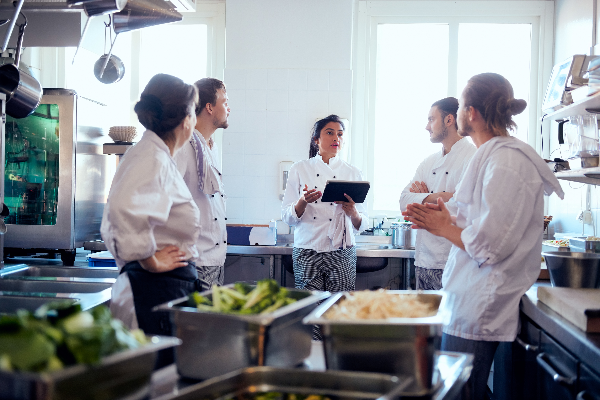
Paulette Comninos, the marketing manager of Piatto Restaurant and Grill, which has seven sites across Gauteng, explains that they use a number of technologies to support their restaurants. These include POS platforms, inventory management and ordering systems, and tools for kitchen, labour, and reporting, with Oracle Simphony’s open API being a core component.
“These technologies have helped streamline kitchen operations by improving stock accuracy, order forecasting, and labour planning,” Paulette says. She explains that the integration between systems reduces stress and mistakes, and improves efficiency and workflows. This is worth it for the group of restaurants, despite the initial onboarding and training time required.
Whilst many kitchens in the country are still hesitant to overhaul their systems with technologies, there are many different perspectives on how to integrate new options well.
Johannes Richter, executive chef and co-owner of the three-star Eat Out restaurant The LivingRoom at Summerhill in Durban, admits that his team works very traditionally from a culinary perspective. However, when it comes to sustainability and energy management, they have changed their way of working significantly by investing in a state-of-the-art solar system.
“When we first decided to move off-grid, I genuinely believed it would be a straightforward, plug-and-play solution, but it wasn’t,” Johannes says. “It took nearly two years to balance the system properly, especially after renovating our kitchen.” Aligning the system’s capacity with the restaurant’s actual energy demands came with a tricky learning curve.
However, it came with significant improvements, including dramatic long-term cost savings, reliable daily performance, and the ability to monitor energy consumption in real-time.
Johannes advises that restaurants that decide to redesign their technologies or energy usage need to expect a lot of troubleshooting. “My biggest advice is to educate yourself as much as possible before you begin and then remain flexible and patient once you’re in it,” he says.
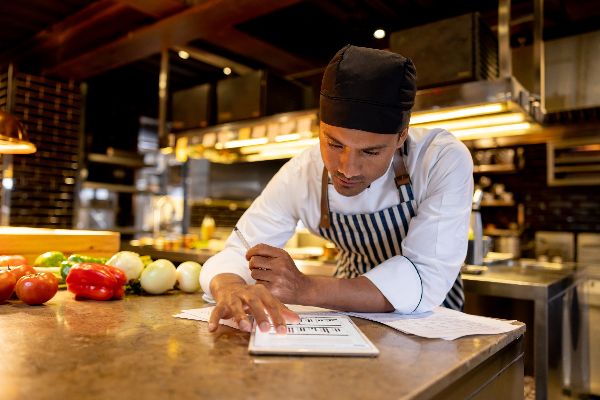
Integrating technology into workflows is already considered in culinary training. Brett Nussey, the CEO and principal of Stir Crazy Cooking and Cape Town Culinary Adventures, explains that they use a range of industry-standard kitchen and restaurant technology. Their location in the V&A Waterfront also puts them at the forefront of sustainability technology. “We are part of a sustainable waste management solution that includes recycling, repurposing waste into energy and using desalinated water for our premises.”
However, Brett has not yet integrated AI into their offering and says the challenges to make this move in the industry are plentiful. “Existing suppliers that we may be locked into contracts with are not really keeping up with changes in technology or embracing AI-driven tech,” he explains. “Most restaurants and establishments cannot afford massive changes to systems unless it has an immediate and significant effect on the bottom line.”
Brett worries about the downtime it can take to repair tech when it runs into trouble, and advises that restaurants choose reliable suppliers. “Suppliers delivering tech solutions need to have prompt service response teams on hand, otherwise the whole system fails.”
Despite the concerns, kitchens are likely to move continually towards becoming more digital. “We see technology as a critical enabler for future growth,” Paulette says. She explains that they hope to expand their work with tech in the kitchen, especially by using data to forecast and by automating operations.
She recommends that other restaurants focus first on systems that are purpose-built for the industry and integrate seamlessly with existing tools. She would favour options that provide real-time data and reporting and are intuitive for staff at all levels. Training and change management are key to ensuring teams fully adopt and benefit from the technology, rather than seeing it as an added layer of complexity.
“When implemented thoughtfully, technology not only improves internal operations but also supports better decision-making and a stronger overall guest experience,” Paulette says.
As South Africa’s dining industry continues to evolve, it’s clear that the key to successful tech and AI integration lies in choosing options that align with a restaurant’s operational needs whilst retaining the human elements that keep customers coming back.


Related posts
-

-
Creating connection: Sommelier Tinashe Nyamudoka on finding beauty in wine
-
It's never just a drink with...
-
-
-
Enter now: The S.Pellegrino Young Chef Academy is open for applications
-
It's more than a culinary...
-
-

-
Announced: The Eat Out Special Awards
-
Stay updated on the Eat Out Woolworths Restaurant...
-
Promoted Restaurants
-

Tempo Luxury Restaurant
Tempo Luxury is a premier fun-dining restaurant strategically nestled in the heart of North of Johannesburg. Renowned as a luxury hybrid restaurant, we seamlessly...
-

Stellenzicht Wine Pod
Our Wine Pod is our unique tasting room on our estate. It was designed to bring nature into the structure. Because of this, when you are enjoying a glass of elegant...
-

Rust en Vrede Restaurant
Chef Fabio Daniel’s ingenuity lies in his ability to put his Italian-Brazilian heart on a plate using fresh South African ingredients and classic French...
-

Cowfish
Cowfish is known for its Asian inspired burgers, sushi, dim sum and grills. Instagram:...
-

Yamitsuki
Founded in 2000, Yamitsuki introduced the concept of Japanese style cuisine, presented to customers via a unique conveyor belt system. The experience was fun and...
-
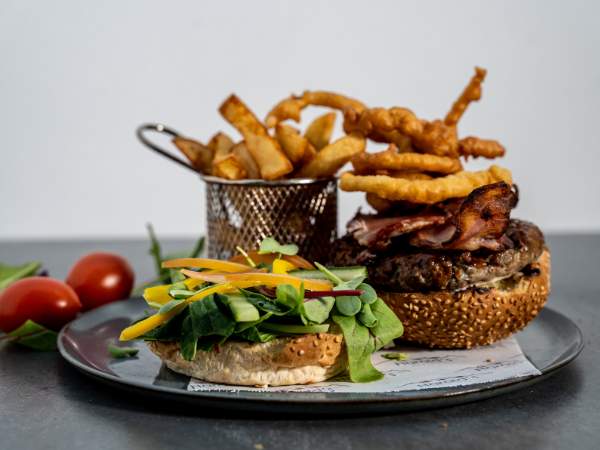
RBG Bar & Grill Restaurant
Cape Town travelers appreciate the chic yet inviting ambiance, perfect for savouring a hot soup, fresh salad or regional specialty. All-day dining makes RBG Bar...