


News
Mastering chocolate: How Danver Windvogel found his passion
Thursday, March 5th, 2026

“I didn’t choose chocolate, chocolate chose me,” explains Danver Windvogel, co-owner of Huguenot Fine Chocolates in Franschhoek, of his serendipitous introduction to a life dedicated to mastering this coveted ingredient.
After finishing school, Danver’s path seemed uncertain until a teacher encouraged him to apply for a bursary to study in Belgium. Three students were selected, including Denver Adonis, who would later become Danver’s business partner, with options to study cheese, beer or chocolate – whichever was approved first. “Two weeks after arrival, the chocolate course was approved.”
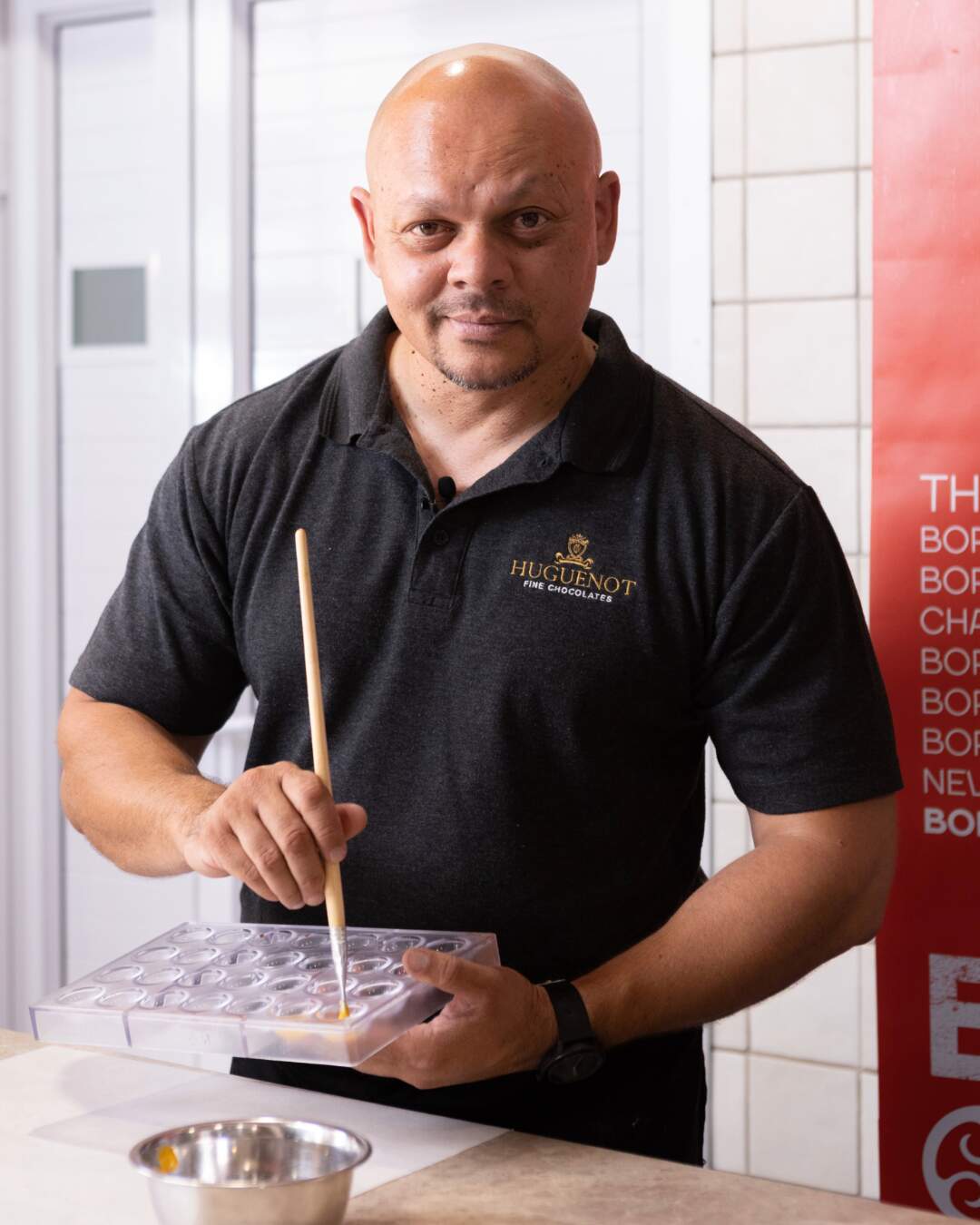 Becoming a master
“I honed my craft by first learning to respect it,” says Danver. “Training in Belgium meant starting with the fundamentals: understanding ingredients, temperature, timing and process. Repetition was key: doing the same things over and over until consistency became instinct.”
Far from glamorous, Danver’s training began with the basics. “At first, the work was humble: folding boxes, making piping bags, cleaning and doing small, repetitive tasks. It felt basic, but without realising it, I was building hand speed, focus and discipline long before I touched a mould,” he explains. “All of those basics – that’s what we’ve built our business on now.”
That early training taught him the most important skill of all – to always keep learning. “At no point in my career have I felt that I’ve started to master the craft,” Danver reflects. “You learn different skills and there’s always something new you can learn tomorrow and there’s always somebody else who’s mastering the craft in a different way, who you can learn from and then apply that skill in your production to develop something new.”
“As a chocolatier, I’ve always believed that you need to be humble enough to give the next person the stage so that they can live that craft and skill and there’s a lot that you can learn from them over time.”
The art of taste
But technique alone doesn’t create delicious chocolate. “When designing a chocolate, finding the right synergy between the shell and the filling is essential. Each element has a role to play, and consistency is what allows that story to unfold smoothly,” explains Danver.
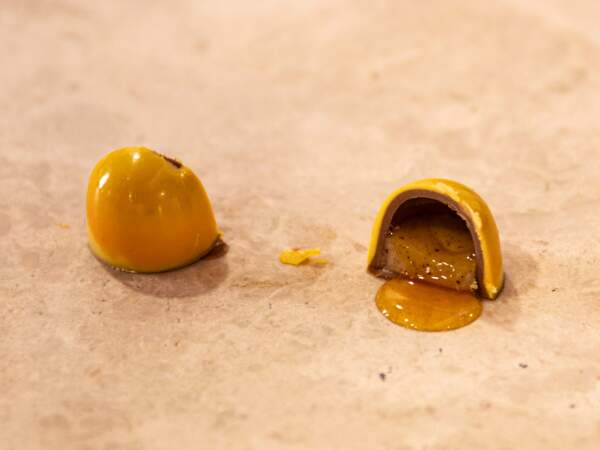
This philosophy comes to life in creations like the bonbon Danver crafted during Eat Out’s visit to Huguenot Fine Chocolates: passionfruit coulis and cinnamon with a touch of white pepper. Using Callebaut 823 for the shell and Callebaut W2 for the ganache, each element serves the overall tasting experience.
“There’s a big difference when it comes to normal commercial chocolate and a couverture like Callebaut,” Danver explains. “Our goal was to take Callebaut and our local flavours of the valley, and the valleys around us, and develop that into a South African flavour, but a good-quality chocolate. Over the years, we’ve built a range with Callebaut that has really helped us reach that goal.”
Working with the best
When Danver first encountered Callebaut chocolate during his Belgian training 29 years ago, it set the quality bar high. “Callebaut was the number one chocolate for Belgian chocolatiers, and it set the benchmark for our craft.”
That first encounter sparked a decades-long relationship with the brand. “For the past 27 years, Callebaut has consistently supported us in the industry. They offered a strong core range, but what set them apart was their willingness to go beyond it. Whenever we needed something added or adapted to help us reach our goals, they went out of their way to support the end result,” Danver explains.
“Through the Callebaut Chocolate Academy, chocolatiers and chefs have always had access to the technical knowledge and guidance they need. This support has been especially important in South Africa, where our chocolate culture is still very young. Callebaut hasn’t just supplied chocolate, they’ve helped build skills, confidence and a future for the craft.”
 Crafting sustainably
Sustainability continues to grow in importance across all industries and chocolate is no exception. Callebaut’s 2015 partnership with Cocoa Horizons reflects their long-term commitment to supporting cocoa-growing communities and ensuring the industry’s sustainable future.
“Sustainability has become a central part of chocolate production because today’s consumers are increasingly conscious of the impact of their choices,” says Danver. “Our consumers today have changed a lot over the years. Ten years ago, [someone who walked into the shop] wouldn’t ask if the cacao was sustainable, if it is sourced through Cocoa Horizons… [Now,] people want to know that the chocolate they enjoy is made responsibly, respecting both the environment and the communities who grow cacao.”
“For consumers, choosing sustainable chocolate is a way to do their part. For producers, it’s about transparency, trust and creating a product that aligns with shared values. Sustainability turns chocolate from a simple indulgence into a meaningful experience, connecting everyone involved in its journey,” Danver concludes.
In our new video series with Callebaut, we visited Danver in Franschhoek to discover more about his craft and the passion that drives him to keep creating. Watch below!
View this post on Instagram

Related posts
-

-
Precision and passion: Jared Melamed’s pursuit of pastry perfection
-
The self-taught chef has built his reputation on technical precision...
-
-
-
The poetry of pastry: How Megin Meikle makes magic in the kitchen
-
Watch as the pastry chef makes dessert...
-
-
-
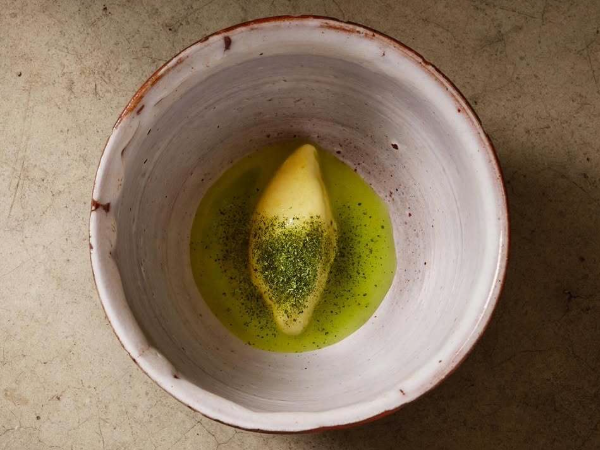
The green revolution: how restaurants are redefining sustainability
-
No longer a nice-to-have, sustainability is now a core part of South...
-
Promoted Restaurants
-

Taste of Thai
The Most Authentic Thai Restaurant in South Africa Our Multi Award winning establishment offers a little genuine glimpse of Thailand in Hilton. through a journey of...
-

Stefan’s at Erinvale Estate Hotel & Spa
Experience a lavish Table d’hôte menu at our latest restaurant; with flavours and inspiration from all over the world, their extremely talented Chef Stefan and...
-

The President Hotel – Restaurant Group
The President Hotel has a host of dining options available under one roof. Whether you’re in the mood for a romantic dinner, casual coffee, quick lunch or hearty...
-
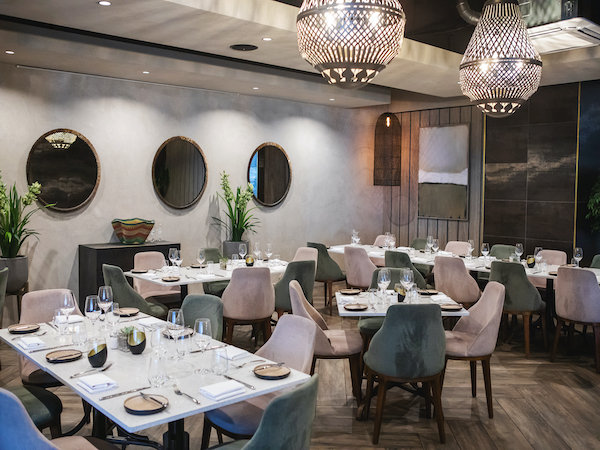
Zest Restaurant
At Zest Restaurant the chefs work behind the open plan kitchen, with its wood fire grill, and can be seen whilst creating delectable dishes. Diners are able to...
-
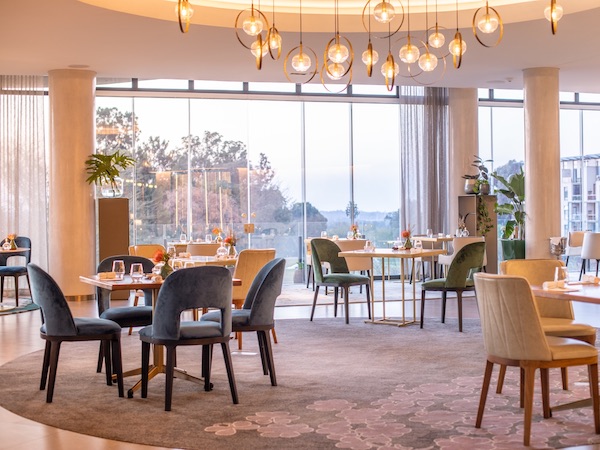
Séjour
At Sejour, modern fine dining is infused with travel and exploration in dishes such as the West Coast oysters with forbidden rice dressing, Wagyu steak and...
-

Stellenzicht Wine Pod
Our Wine Pod is our unique tasting room on our estate. It was designed to bring nature into the structure. Because of this, when you are enjoying a glass of elegant...