


News


This week, we head to Eat Out three-star restaurant FYN to take a behind-the-scenes look at the creation of one of the restaurant’s signature dishes, the Bok Box.
A celebration of local game, this dish starts when a selection of game meat is brought to the table so the diner can choose their preferred venison. Currently, guests can choose between springbok, eland and ostrich.
As to be expected from a restaurant that champions sustainability (and has won multiple awards for its efforts), the game meats are chosen for their eco-conscious credentials and the low impact they have on the environment. They also give guests a chance to try meats they might not have had access to in the past.
To find out more about the inspiration behind this dish, plus just how they’d feel if a guest licked their plate, we chat to FYN Culinary Director Ashley Moss and Executive Chef Bea Malherbe.
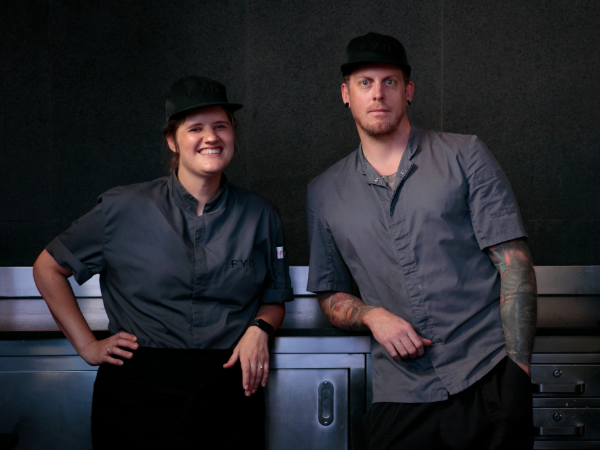
The dish
The Bok Box is the diner’s choice of springbok, eland or ostrich, served with caramelised quince, Jerusalem artichoke cream, ancient-grain crumb and a roasted peanut sauce.
What inspired this dish? Is there a personal story or specific influence behind it?
This dish is inspired by the diverse game available in South Africa, which we wanted to showcase to guests. Choosing game is a more sustainable practice than eating farm-reared animals – it has less impact on the environment. It’s a combination of utilising meat that is better for the environment, but also having local meat on offer that guests cannot obtain easily, especially foreign guests.
Read more: The alternative proteins reshaping the culinary scene
What are the key ingredients and why were they chosen?
Currently, Springbok, eland and ostrich – chosen to showcase interesting and flavourful game. Springbok is our national animal; eland is a majestic big buck that has spiritual significance to the indigenous San people and ostrich has great economical and ecological importance in South Africa.
Are there any unexpected ingredients or flavour combinations that make the dish unique?
Our Bok Box is served with a caramelised quince, Jerusalem artichoke cream, ancient-grain crumb and a roasted peanut sauce. Game works well with a hint of sweetness – the caramelised quince. We tie it in with a nutty and rich mouthfeel from the Jerusalem artichoke cream and the roasted peanut sauce. We add some fat to the lean game by adding an ancient-grain crumb (Parmesan, butter, sorghum, amaranth, millet).
What’s the most technically challenging part of making this dish?
Because game is a lean meat, cooking it correctly over an open flame while ensuring it stays juicy and tender can be challenging. It requires precision to get it just right.
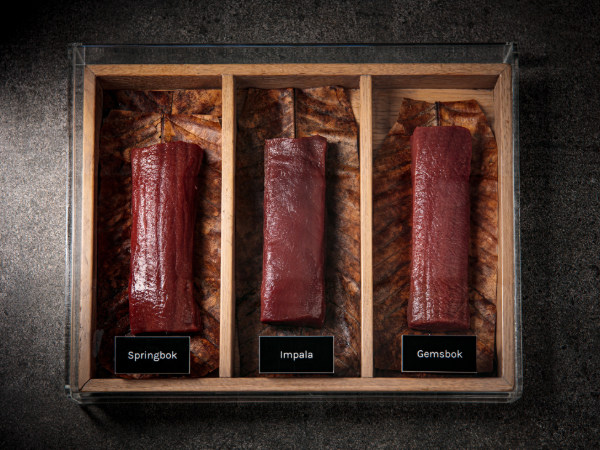
Guests are presented with the Bok Box so they can choose their meat. Past iterations featured springbok, impala and gemsbok.
Is there a particular technique or piece of equipment essential to its preparation?
Our Binchotan grill. It’s really hot so we can get good colour without drying out the meat and it gives a really nice open-fire flavour. We source our charcoal from Namibia through sustainable suppliers.
Did this dish go through multiple iterations? What changed and why? How long did it take to perfect the final version?
Our dishes constantly evolve – who’s to say when we’ve reached the final version? We look at what is in season – fruit, vegetables etc. Elements on the dish might go through a couple of different iterations until the best combination has been found.
Was there a breakthrough moment in developing it?
The breakthrough moment is when everyone is happy – nothing will be added or taken away from the dish because the balance is perfect. Perfecting the presentation of the dish as well – presenting the game on a dried magnolia leaf, the contrast of the leaf and the game makes the meat stands out.
Did you test it with your team or guests before putting it on the menu?
We tested it amongst our team and close professional network. Every dish will go through a couple of tests and trials to ensure a great dining experience for the guests.
Is there a specific way you would like guests to eat or interact with the dish?
We would love to see guests tucking in with their bare hands. It’s a primal dish, bringing people back to their roots here in the cradle of human culture. The best feeling is when guests just about lick their plates clean; they must feel satisfied and overcome with joy from eating.
View this post on Instagram
What does this dish say about your approach to cooking or your culinary philosophy?
Restraint; prepared with respect to showcase the ingredients, not disguise them. Clean cooking – don’t add too much into the dish, stay true to the ingredients and let them shine.
What do you want guests to feel as they’re eating it?
Complete satiation. Joy. Nostalgia. Euphoria.
If you’d like to experience this dish for yourself, book your table at FYN.

Related posts
-


-
The 2026 Eat Out Woolworths Restaurant Awards winners
-
Congratulations to all the...
-
-
-
More than a meal: Celebrating South Africa’s destination dining
-
Experiences worth the drive....
-
-
-
Mastering chocolate: How Danver Windvogel found his passion
-
"I didn't choose chocolate, chocolate chose...
-
Promoted Restaurants
-

Cowfish
Cowfish is known for its Asian inspired burgers, sushi, dim sum and grills. Instagram:...
-

96 Winery Road Restaurant
This venerable place has been part of the fabric of Stellenbosch for so long that they must be doing something right. The many people who love coming here just...
-

Baia Seafood Restaurant
This perennial favourite offers upmarket fish and Portuguese options that still manage to bring in the patrons after all these years. If these don’t interest...
-

The Alba Harties Harbour
Welcome to Harties Harbour, situated in the Kommandonek Wildlife Resort, your one stop venue for the best that Hartbeespoort Dam has to offer. Daily Lunch and...
-

Grande Roche Restaurant
Grande Roche Restaurant is a grand old lady with a fresh set of pearls and vibrant lipstick. Chef Kevin’s food style is an ever evolving feeling and depends...
-

Pizza Connection
There has been a spate of great new pizza places popping up in the city over the past couple of years. Pizza Connection (where Pesce Azzuro used to live) in...