


News
The future of SA dining: unapologetically local and confidently its own
Monday, July 27th, 2026

For decades, European traditions defined what “fine dining” looked like on South African plates: the techniques, the plating, and service rituals that came with a very specific set of rules. Local ingredients, when they appeared at all, were cast in supporting roles. The result was a dining landscape where African food often showed up as an accent rather than the main event – what Chef Absalom Kotsokoane (Absa) describes as “a scatter of amaranth, a smear of something ‘inspired by’ rather than the foundation of the dish”. Absa is a champion of indigenous cooking and founder of Happy Spoon.
Today, a new generation of chefs are rewriting that script – not by rejecting technique, but by reclaiming the flavours, ingredients and stories that have always been theirs. As Eat Out culinary director Abigail Donnelly notes, the shift she is observing sees chefs including ingredients from around Africa and showcasing them in culinary traditions and cultural storytelling, which connect diners to history and family traditions.
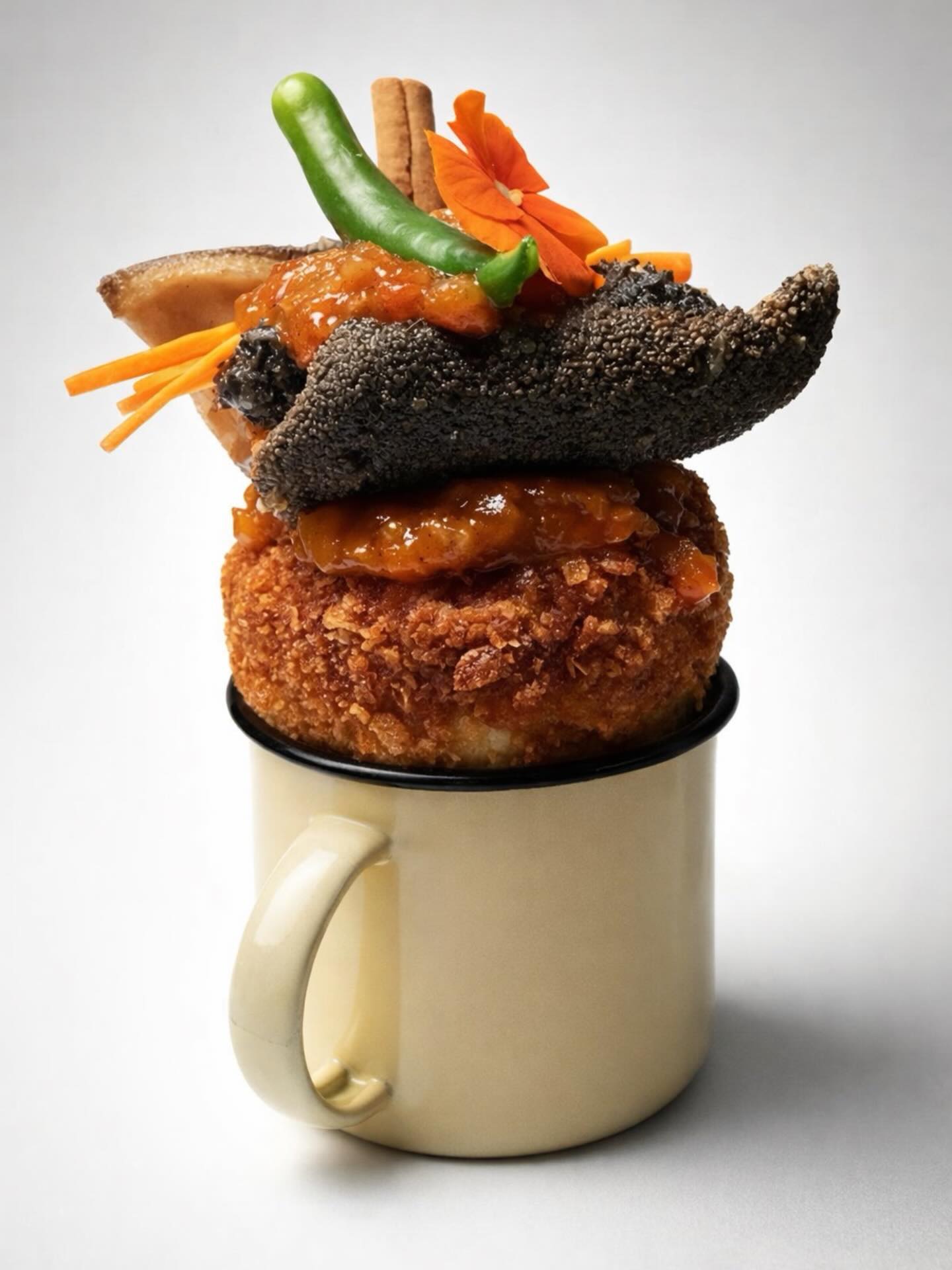
Pap and Mogodu
Reclaiming African flavours
Over the past three to five years, this shift has really picked up speed. What started as a few chefs quietly exploring on their own has grown into a bigger movement – not because it’s trendy, but because chefs have a deeper desire to own and express their identity through food.
Chef and activist Mokgadi Itsweng sees this shift happening across racial groups, which she finds encouraging: “I can see there are a lot of chefs, including white South African chefs, taking on indigenous ingredients and flavours and bringing them onto the plate. It is great to see that it is across the racial line.”
Chef Moses Moloi of Gigi Restaurant in Joburg sees the shift as real but still in its early stages. “More chefs are beginning to consciously explore African ingredients, stories, and traditions in a more intentional way, which is encouraging,” he says. “However, I still believe we are only scratching the surface. African cuisine has incredible depth – in ingredients, history, and technique – and there is still much more work to be done in presenting it on its own terms.”
A global conversation
This isn’t just happening in South Africa. Globally, African food is undergoing a moment of recognition. In London, restaurants like Akoko and Chishuru have earned Michelin stars, with Chishuru’s founder Adejoké Bakare making history in 2024 as the first Black woman in the UK to receive the accolade. In New York, restaurants like Teranga in Harlem are bringing West African flavours to a mainstream audience. In 2023, West African food was the top-trending cuisine on the booking platform OpenTable, a momentum that has carried into 2026.
The global popularity of African music and culture has heightened interest in the continent’s food, pushing it from the margins into the mainstream. South Africa’s broader tourism sector is experiencing significant growth, with 10.5 million international tourist arrivals in 2025, a 17.7% increase from the previous year. The country’s culinary tourism market is projected to exceed R400 billion by 2029, driven by travellers increasingly seeking authentic, heritage-focused food experiences.
For South African chefs, this global context offers both validation and opportunity. The world is paying attention to African food in a way it hasn’t before. Today’s innovators are not simply swapping European ingredients for African ones. They are rethinking the framework – questioning what refined or elevated dining means, who it serves, and how African identity can shine on its own terms.
At Gigi, Moses approaches this through ingredient-led storytelling. “For me, the starting point is always the ingredient. It’s about understanding it fully, respecting its origin, and allowing it to express itself. Technique is then used to elevate the ingredient, not to change its identity. African flavours already carry depth; the role of fine dining is to reveal that depth in a new way.”
During Africa Month, his team created a seven-course tasting menu titled “Cape to Cairo”, which paid homage to the continent from south to north. “Each course referenced a different region, ingredient, or cultural influence, and the menu was designed as a connected African narrative,” he explains. “It was one of the most meaningful menus we’ve done, and it reinforced that African cuisine does not need to be diluted to be understood. When it is presented with intention, structure, and storytelling, it stands confidently in a fine dining space.”
Mokgadi offers a different perspective, challenging whether African food should be forced into the fine dining framework at all. “Because fine dining in its purest form is a French expression, it is not ours. Our way is family-style: put the food on the table and share,” she says. “Trying to put African food into this framework that is French can be problematic. I think there is a way African chefs can find their own expression using our methods without having to give up on presentation.”
Her vision includes African cooking methods that are not adapted to fit European dining standards. “Using our style and methods – for instance the clay pots to bake and to cook, using the earth as an oven to retain flavours. I think there is a way for us to focus on the preparation and the curation of our dining experiences in the way we cook and present our food that should be on our fine dining table as Africans.”
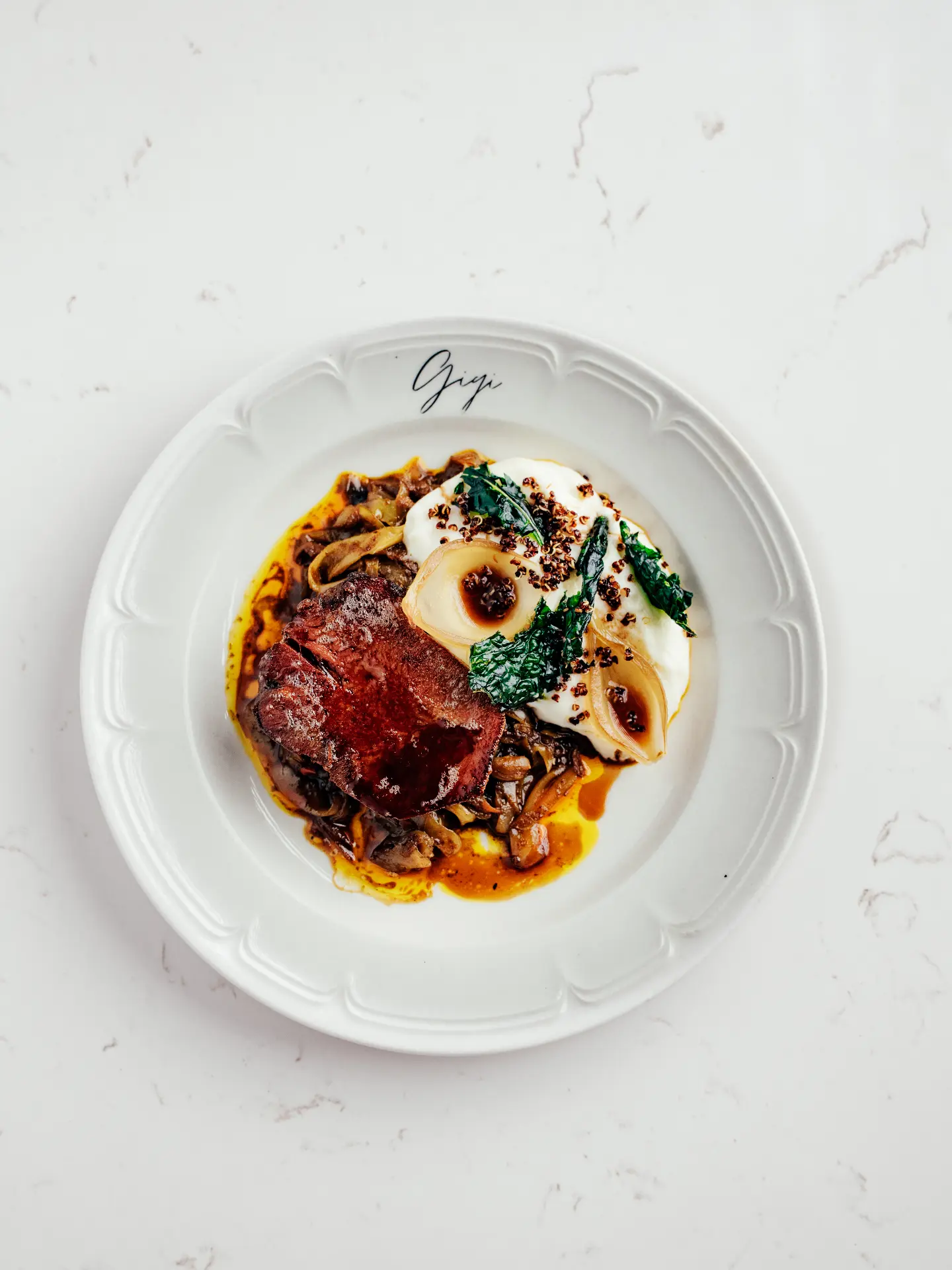
Slow-braised Beef Tongue with Chakalaka
Traditional methods meet modern dining
One of the most compelling aspects of this evolution is the recognition that many techniques that are considered hallmarks of European dining – including fermentation, curing, smoking, and slow cooking – have deep roots in African culinary traditions.
Absa has discovered that time-honoured methods shine when elevated to the standards of fine dining. “Slow, ancestral techniques like fermentation, smoking, offal cookery, and grain-based thickening have translated beautifully once given fine dining precision: proper reductions, controlled temperatures, refined plating,” he says. “The trick is precision in service of soul, not precision that sanitises it.”
Abigail highlights the growing prominence of cooking methods that connect diners to the earth: “Many techniques have been highlighted in the preparation of dishes – embers, smoke, fire, clay, fermentation.”
There is also a deeper layer to this conversation; Absa argues that part of developing a distinct African food identity means naming what already exists. “By codifying what we already know instinctively… writing it down, teaching it, naming our techniques instead of borrowing foreign vocabulary for what our grandmothers were already doing with intention,” he says. “Fine dining is as much about narrative as it is about the plate, and our narrative is rich enough to carry a room.”
Dishes that define the movement
One example of this culinary evolution is Moses’s reinterpretation of Seven Colours, a beloved South African dish rooted in celebration and community. At Gigi, it’s reimagined as a breakfast dish on the menu, used as what he calls “a familiar cultural anchor reimagined through a fine dining lens.”
Absa’s Isidlo Sokhokho takes chicken offal – an ingredient many high-end kitchens discard – and reimagines it in a paella-style presentation. The dish is a deliberate act of repositioning, honouring an ingredient that carries cultural weight and placing it at the centre of a fine dining plate rather than the margins.
Mokgadi points to a dish by a fellow chef: Chef Wandile Mabaso’s (of Eat Out star restaurant Les Creatifs) braised ox tongue with chakalaka dressing, served with mash. “He is a prime example of someone who understands the French way of cooking food and him bringing that classical training into his expression of African food and his taste and palate that is very African,” she says.
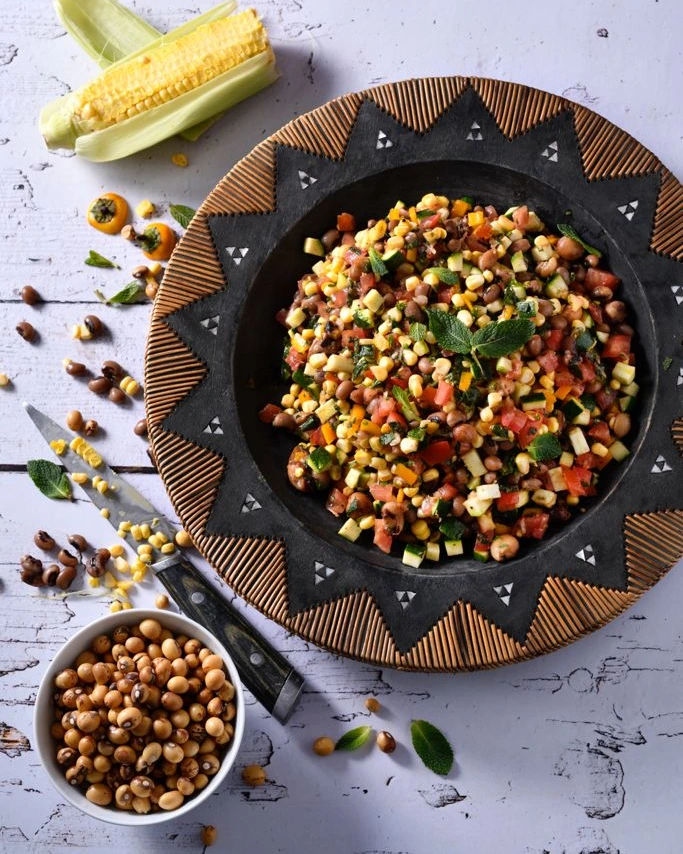
African bean salad
What this means for South African culinary identity globally
If the past three to five years have been about reclaiming and establishing, the next phase may be about codifying and scaling. Moses seems optimistic about what lies ahead. “I believe the future of African dining is very exciting. We are moving toward a space where African cuisine is not just included, but recognised as a cuisine with its own identity, voice, and structure on the global stage.”
Absa sees the future in terms of ownership and authorship: African chefs not just cooking the food but defining the terms on which it enters fine dining spaces.
Mokgadi envisions a future where African cooking methods are recognised as fine dining in their own right, without needing to be filtered through European frameworks.
Great cooking has always been about more than what is on the plate. It is about memory, identity, place and belonging. The culinary evolution underway in South Africa is about expanding the definition of what elevated dining can be: African chefs writing their own menus, in their own language, on their own terms. And perhaps most importantly, it is about recognising that the future of South African dining won’t be defined by how closely it mirrors European traditions, but by how confidently it speaks in its own voice.


Related posts
-

-
Top wine farm restaurants in South Africa
-
These Eat Out star establishments showcase the perfect marriage of...
-
-
-
Eat Out’s guide to the best winter restaurant specials for 2026
-
This winter, a handful of Eat Out star restaurants are offering...
-
-

-
What it takes to be a star restaurant: Eat Out’s judging scorecard explained
-
From the culinary techniques to the service and presentation, each...
-
Promoted Restaurants
-

Baia Seafood Restaurant
This perennial favourite offers upmarket fish and Portuguese options that still manage to bring in the patrons after all these years. If these don’t interest...
-

Tempo Luxury Restaurant
Tempo Luxury is a premier fun-dining restaurant strategically nestled in the heart of North of Johannesburg. Renowned as a luxury hybrid restaurant, we seamlessly...
-

Stefan’s at Erinvale Estate Hotel & Spa
Experience a lavish Table d’hôte menu at our latest restaurant; with flavours and inspiration from all over the world, their extremely talented Chef Stefan and...
-

Cowfish
Cowfish is known for its Asian inspired burgers, sushi, dim sum and grills. Instagram:...
-

The Manor at Nederburg
No visit to the Cape Winelands is complete without a stop-over at Nederburg’s family-friendly The Manor restaurant and wine tasting hub in Paarl. Located in the...
-

Bistro31
Bistro31 Bar & Eatery is based on the Ground Floor of the DoubleTree by Hilton Cape Town Upper Eastside hotel. We are open from 06:30 to 23:00, for breakfast, lunch...