


News
The sharing-plates menu: a diner’s dream or a chaotic nightmare?
Thursday, September 18th, 2025

I still remember a time when “tapas”, “small plates” and “family-style dining” were niche alternatives to the my-plate-is-mine approach. Now, between upscale restaurants adopting communal-style eating, non-Western cuisines breaking through into the mainstream and Jamie Oliver’s (incessant) mission to get us all sitting down to share food again, sharing plates reign supreme. But is this the best way to eat out? Or just another trend to hack the world of high-end dining?
In a 2023 article in Food and Wine, food writer Oset Babür-Winter bemoaned the great spectacle that is sharing-plate dining in the modern era. It’s a setting we can all relate to: The waiter sidles up to the table and instead of a clear set of single-serve specials, you’re welcomed by a TedTalk about three-person portions, complementary dishes and mix-and-match options. Sometimes dazzling, often a little dizzying.
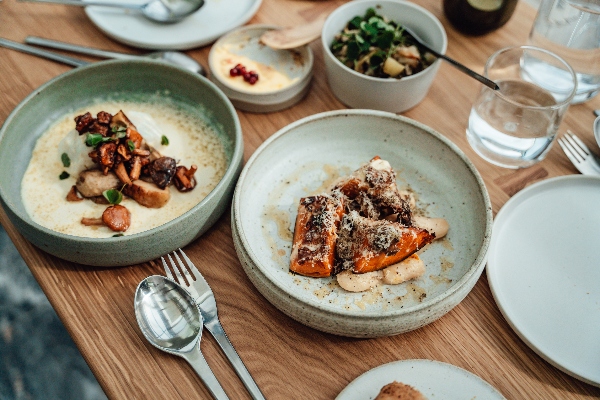
On the one hand, there’s no doubt that the sharing-plate model works when you’re trying to experiment – especially if you’re new to a restaurant, trying out a country’s delicacies for the first time or (like me) deeply indecisive and in need of prep time with the menu beforehand. Without question, shared plates offer the opportunity to dip in and out of different things and explore beyond the big-ticket item of the day. But while the idea of swapping from crisp to doughy, sweet to sour and rich proteins to unusual vegetables sounds like a dream, when it’s bad, it’s a full-on nightmare. Either there’s too much or too little, or you’re stuck ping-ponging through so many dishes that you can’t quite decide what you like or indeed whether you like it at all. However, like all things dining-related, the question is not just about the restaurant, the cuisine or the presentation – sometimes the choice is cultural.
When catching up with Lerato Mogoatlhe, seasoned traveller and author of Vagabond: Wandering through Africa on Faith, she offered a Pan-African perspective on why the continent leans towards a shared-plate experience.
“It’s communal; it connects people partaking in the meal in a way that an individual plate cannot,” she says. “This preference didn’t matter to me until I lived in Mali and Ethiopia, where meals are communal in every sense of the word. As in, meals are not just a group event at home, they are in public as well. People insist that you dig your right hand into the communal plate even at restaurants. When hands are not digging into a large communal plate, like North Africa, the table brims with small plates, which serve everything: salad, pickles, dips, breads, falafels, bean stews.”
This is the case across much of the globe, particularly in countries where rigid etiquette and hyper-individual preferences simply don’t apply. It’s feast over flavour, hands and chopsticks over endless cutlery options, and a generally less self-indulgent experience overall. But against the dominant backdrop of tiny plates of tweezer food, cooked-to-order French-style approaches and the ever-important entrée moment, it’s no surprise that shared plates still jostle for popularity against the standards we already know.
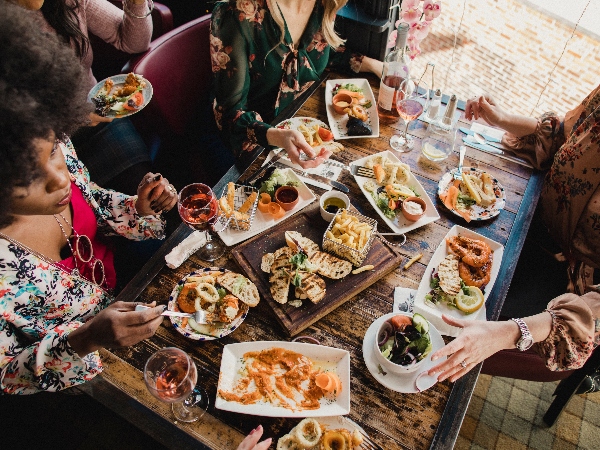
For me, an armchair rather than couch girl, the notion of shared plates feels a little too informal sometimes, a little too frenetic, and removes the magic of a dish made just for me. Of course, I do not take this mentality to a braai, picnic or potluck, but just like there’s one chair, I prefer one plate. The opportunity to savour a steak cooked just how I like it, with no interrupting forks and fingers hovering over my plate, is the escape I’m looking for when I head out to a restaurant.
However, for those devoted to shared dining, the Spaniards – inventors of tapas – offer some basic rules for a successful shared-plate experience. I called up Barcelona-based tapas connoisseur Manuel Sandoval for some advice – and it’s really quite simple: “Balance hot and cold; start off with a drink to set the tone; one dish should not be more than four bites. It’s not supposed to be a buffet the way people are doing it now,” he shared.
And he’s right. Like all things, the execution is as important as the idea – and while many traditional cuisine-style restaurants understand portion sizes, how to complement dishes and how to avoid confusion, slapping some unrelated shared plates in one section seems to be the strategy of many everyday eateries in South Africa. Reasonably unplanned and pretty random, these kinds of options create more confusion than community, diluting the synergy of shared plates into what is essentially a mixed rugby-side platter of ill-fitting items.
So, what’s the verdict on the shared-plate debate? A diner’s dream when done well or a chaotic nightmare of cuisines? It’s up to you.


Related posts
-

-
Table for one: the deliberate and intentional rise of eating alone
-
Solo dining is no longer a consolation experience. It is,...
-
-
-
Why do people really go to bars?
-
Nobody goes to a bar to drink. They go to be distracted, soothed,...
-
-

-
Top wine farm restaurants in South Africa
-
These Eat Out star establishments showcase the perfect marriage of...
-
1 Comment
Leave a comment
Promoted Restaurants
-

Grande Roche Restaurant
Grande Roche Restaurant is a grand old lady with a fresh set of pearls and vibrant lipstick. Chef Kevin’s food style is an ever evolving feeling and depends...
-

Yamitsuki
Founded in 2000, Yamitsuki introduced the concept of Japanese style cuisine, presented to customers via a unique conveyor belt system. The experience was fun and...
-

The Alba Harties Harbour
Welcome to Harties Harbour, situated in the Kommandonek Wildlife Resort, your one stop venue for the best that Hartbeespoort Dam has to offer. Daily Lunch and...
-

96 Winery Road Restaurant
This venerable place has been part of the fabric of Stellenbosch for so long that they must be doing something right. The many people who love coming here just...
-

Cowfish
Cowfish is known for its Asian inspired burgers, sushi, dim sum and grills. Instagram:...
-

Orangerie at Le Lude
There’s something innately celebratory about visiting an estate like Le Lude that specialises in Methode Cap Classique. Naturally, this adds an extra sparkle...
The shard plate experience always does my head in because chef can’t get out of their having to be odd numbers to everything. It’s a nightmare trying to share dishes that only have 3 slices/portions/ etc.
We all know this is how chefs have been trained to plate classical but it is supremely annoying when they that two people are sharing, so make the portioning equal.