


News
Don’t be those guests: chefs speak up about no-show culture in restaurants
Monday, February 2nd, 2026

If you spent any time in Cape Town this summer season, you’ll know how busy the restaurants were. Despite this, no-shows remain a persistent and costly challenge for the industry – one without a clear solution.
There can be many reasons guests don’t arrive, and not all cases are ill-intentioned – emergencies happen, people forget. Yet, some guests make bookings as a backup only to make alternate plans on the day.
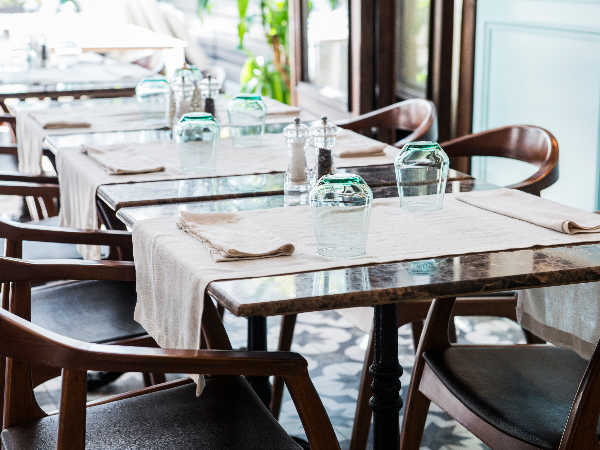
“Concierge services often book multiple restaurants to give their clients options,” says Jess van Dyk, head chef and owner of Eat Out star restaurant Post & Pepper in Stellenbosch. “People also often book a big table out of convenience and then arrive with fewer people.” At Good to Gather, a restaurant with nearly impossible availability, owner Jess Shepherd says outright no-shows are rare thanks to hands-on confirmation, but shifting table numbers remains a challenge. “Empty seats are extremely hard, if not impossible, to fill at short notice,” she explains. Benign or not, when guests don’t honour their reservations, it causes chaos for restaurants.
And these consequences extend far beyond a missed bill. Restaurants arrange staff based on bookings, so a no-show can unravel an entire service. “We roster our team according to reservation numbers,” says Nina du Toit, head chef of Eat Out’s 2025 Restaurant of the Year, Salsify at The Roundhouse. “If we have no-shows, we’re paying staff we don’t need.”
Jess van Dyk describes the ripple effect when 20% of guests don’t show up. “Five no-shows a week could equate to almost R25 000 a month,” she says. Crucially, by the time a table is declared a no-show, it’s often too late to recover. “There would rarely be a walk-in at that time, and anyone on a waiting list has usually made other plans.”
While this isn’t a uniquely Cape Town problem, it does seem to be more prevalent here. Wesley Randles, who runs the Eat Out star restaurant Nevermind in Cape St Francis, says, “Thankfully, this is the first year where we’ve had very limited no-shows.”
In Johannesburg, chef David Higgs, who runs The Marble Group of restaurants, reckons the issue is worse in Cape Town. “During the week Joburg is a lot more stable, and we don’t see many no-shows,” says David. “We know them; this is a relationship that’s been built over 10 years.” Comparatively, in Cape Town, he says it can be difficult to build these relationships. “Especially in the Waterfront, you might not get as many regulars,” he explains.
In response to no-shows, many restaurants have made the controversial move to require deposits. At Salsify, Nina confirms that requiring deposits has led to “almost zero no-shows this season.” Wandile Mabaso, owner and head of Les Creatifs in Joburg, agrees: “Requiring a deposit significantly reduces no-show rates because guests have a financial incentive to honour their reservation.”
According to Dineplan’s Industry Trends Report, the accepted no-show rate across the restaurant industry sits at around 20%. For restaurants using the booking platform, the national average drops to 1.6%, thanks largely to automated reminders and prepaid deposits. “Even a small pre-payment increases commitment and encourages guests to communicate changes in advance,” notes Daniël Nortjé, Dineplan’s digital campaign manager.
Still, deposits are not a silver bullet. They don’t cover the full cost of a missed service, and they rely on clear communication to work effectively. Beyond deposits and automated reminders, one way to mitigate no-shows appears to be the human element.
Wesley says Nevermind currently has a receptionist who phones to confirm reservations. “It works quite well, but there’s only so much that one person can do.” At Good to Gather, they also rely heavily on the analogue approach. “We send friendly reminders several days before, which is time-intensive, but necessary,” says Jess Shepherd. David says the human connection is crucial. “You’ve got to build relationships with people, so they feel bad not pitching without a phone call,” he laughs.
Ultimately, restaurateurs argue that the issue is cultural as much as operational. Booking a table should be seen as a commitment. As Jess van Dyk puts it, “If you miss a flight or a concert, you don’t expect a refund. A restaurant booking should be treated the same way.”


Related posts
-


-
Creating connection: Sommelier Tinashe Nyamudoka on finding beauty in wine
-
It's never just a drink with...
-
-
-
Enter now: The S.Pellegrino Young Chef Academy is open for applications
-
It's more than a culinary...
-
-

-
Announced: The Eat Out Special Awards
-
Stay updated on the Eat Out Woolworths Restaurant...
-
Promoted Restaurants
-

Taste of Thai
The Most Authentic Thai Restaurant in South Africa Our Multi Award winning establishment offers a little genuine glimpse of Thailand in Hilton. through a journey of...
-

Grande Roche Restaurant
Grande Roche Restaurant is a grand old lady with a fresh set of pearls and vibrant lipstick. Chef Kevin’s food style is an ever evolving feeling and depends...
-

Orangerie at Le Lude
There’s something innately celebratory about visiting an estate like Le Lude that specialises in Methode Cap Classique. Naturally, this adds an extra sparkle...
-

Belly of the Beast
Belly of the Beast, situated in the heart of Cape Town, promises a unique dining experience. Inspired by South African cuisine, each course is more...
-

Kleine Zalze Restaurant
Kleine Zalze Estate is a reputable producer of a wide range of quality wines. The Kleine Zalze Restaurant offers guests the opportunity to enjoy a relaxed,...
-

The Manor at Nederburg
No visit to the Cape Winelands is complete without a stop-over at Nederburg’s family-friendly The Manor restaurant and wine tasting hub in Paarl. Located in the...