


News
Out with the old rule book: Chefs weigh in on the next era of tasting menus
Friday, October 24th, 2025

Across South Africa, a new rhythm is shaping the way we dine. What was once a formal showcase of technique has evolved into an expressive and personal format – one that balances refinement with approachability, and precision with narrative. From the immersive storytelling at Stellenbosch’s DUSK to the playful pulse of The Red Room by Chefs Warehouse in Cape Town, Eat Out star restaurants are reimagining the tasting menu as experiences rooted in place, season and intention.
The evolving diner
As chefs evolve, so do diners. Curiosity and engagement have replaced passive consumption. “Guests today are more engaged. They’re not just coming in for a meal; they’re looking for a connection,” explains executive chef Carla Schulze of Salon in Cape Town. In Durban, Eat Out’s Chef of the Year, Johannes Richter of The LivingRoom at Summerhill Guest Estate, has witnessed a similar transformation: “When we started, locals didn’t believe in our concept. Now, most of our guests are Durbanites, and that pride in local produce and heritage has become part of the experience.”
Even in Stellenbosch, executive chef Callan Austin of DUSK has seen perceptions change. “Initially, the idea of a tasting menu was met with some hesitation,” he says. “But as the DUSK brand grew, so did the appetite for these kinds of experiences.” This mindset gives chefs space to experiment, balancing creativity with clarity, and turning the tasting menu into a bridge between ingredients, story and emotion.
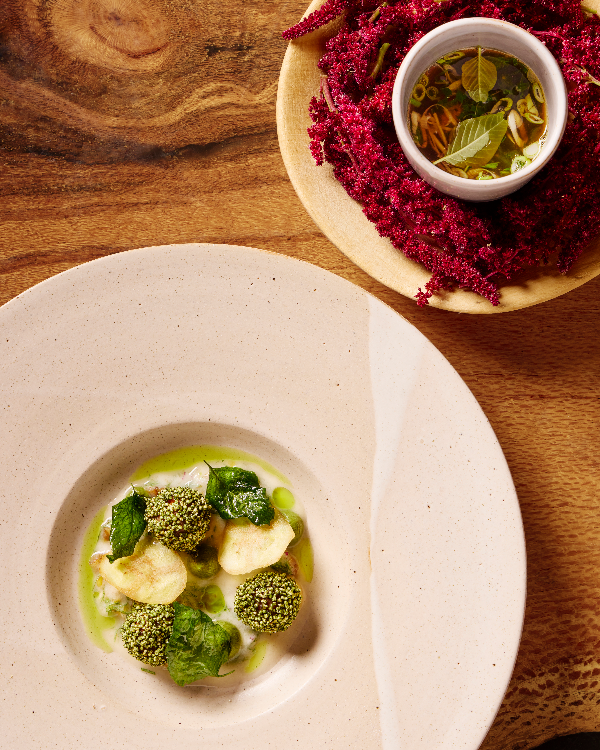
The LivingRoom at Summerhill Guest Estate
Storytelling on the plate
If there’s one question shaping the future of the tasting menu, it’s this: are we moving towards storytelling or simplicity? For most chefs, the answer lies somewhere in between. Chefs are exploring how far storytelling can go without losing clarity – after all, today’s diners want a story, yes, but they also crave simplicity, lightness and clarity.
Callan sees menus as a conversation with guests. “I create menus that tell a story beyond the ingredient,” he explains, citing desserts that playfully poke fun at imported truffles or courses inspired by Formula 1. Each plate is meant to spark curiosity and reflection, inviting diners into a dialogue with the flavours.
Charné Sampson, head chef at Épice in Franschhoek – recipient of the 2025 Eat Out Callebaut Dessert Award – adds, “guests like to understand why the chef has created a certain menu.” Across the country, chefs are finding that the balance between storytelling and simplicity is key. At The Red Room, head chef Caroline Lamb weaves nostalgia into her tasting menus. “Being a Pan-Asian restaurant gives us a variety of ingredients and techniques to play with,” she says. “We bring both new-world and old-world flavours to light.”
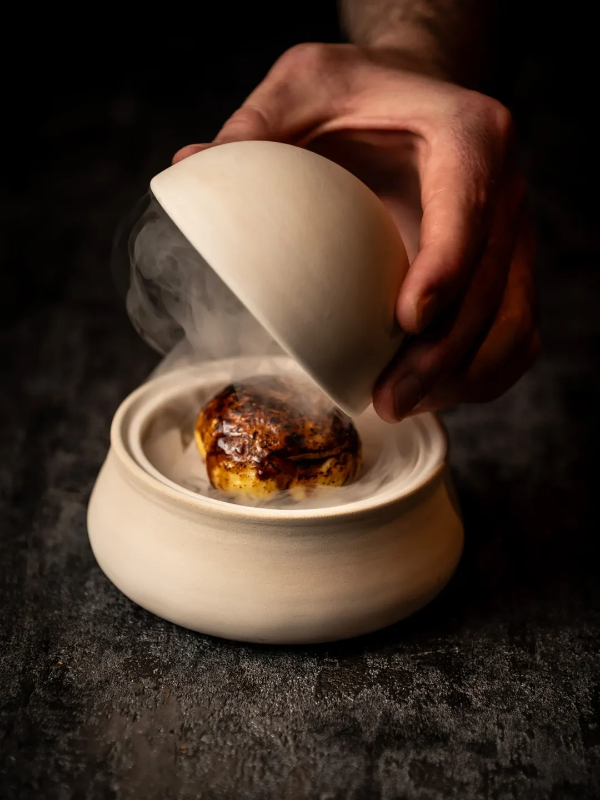
DUSK
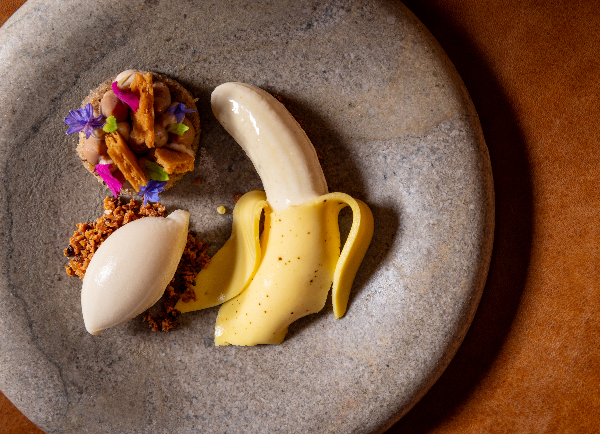
Épice
Seasonality as a compass
For many chefs, the seasons are no longer just an influence – they’re the very heartbeat of the menu. Adriaan Maree, head chef at Fermier in Pretoria, explains: “The whole concept of Fermier’s tasting menu is based on seasonality; our suppliers grow specific produce with us in mind.” This approach allows each dish to feel both humble and expressive, reflecting Pretoria diners’ embrace of a relaxed yet thoughtful fine-dining experience.
Carla adds, “Each shift in weather brings an entirely new palette, from quince to rhubarb; from Jerusalem artichokes to globe artichokes. Our ingredient-led minimalism – no frills, no fuss, just honest cooking – celebrates each element.” Working closely with small farms, she ensures every course mirrors the season’s bounty.
Johannes frames season as story: “Nature is our main inspiration. Every ingredient, every harvest, has its moment.” His current “Rainy Season” menu opens with a handwritten note that evokes the smell of first rains on warm soil, the burst of leafy greens and sun-warmed tubers. At Épice, Charné adapts dishes to what’s available locally, letting the land itself guide flavour, texture and aroma.
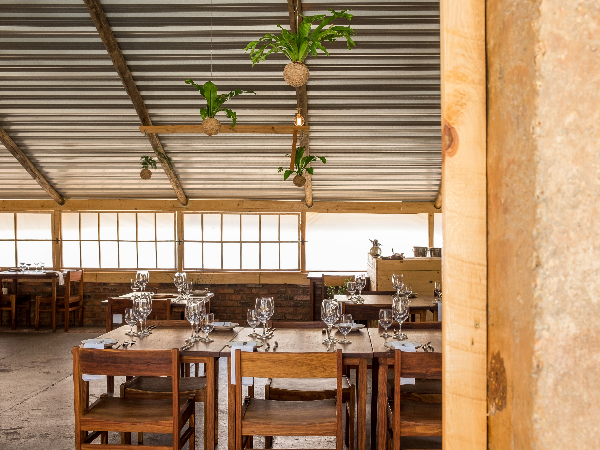
Fermier
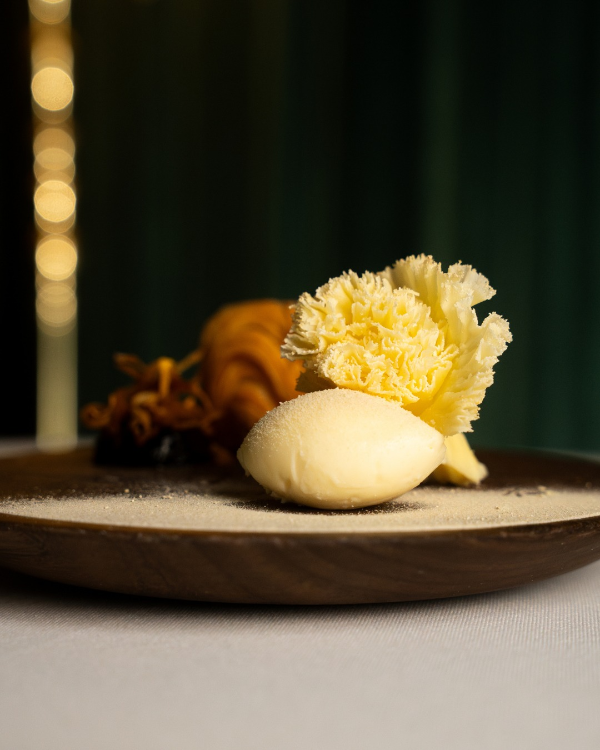
Salon
From fine to fun dining
While storytelling shapes the narrative, playfulness defines the mood. Chefs are loosening the edges of what a tasting menu can be, blending precision with joy and refinement with delight. At The Red Room, Caroline calls her approach “fun dining”: “Instead of the traditional twenty plus elements per plate, we focus on one ingredient and make it shine.” It’s a philosophy that invites curiosity, laughter and lightness without compromising technique.
At DUSK, Callan pushes boundaries with imaginative touches that surprise and delight. Beyond courses inspired by Formula 1, he recently served a dish in ceramic dog bowls engraved with the names of local rescue dogs – a whimsical initiative that raised awareness and donations, showing that fine dining can be both thoughtful and unexpected.
Carla combines refinement and immersion: “Tasting menus are moving in both directions, becoming more refined in execution while also embracing playfulness.”
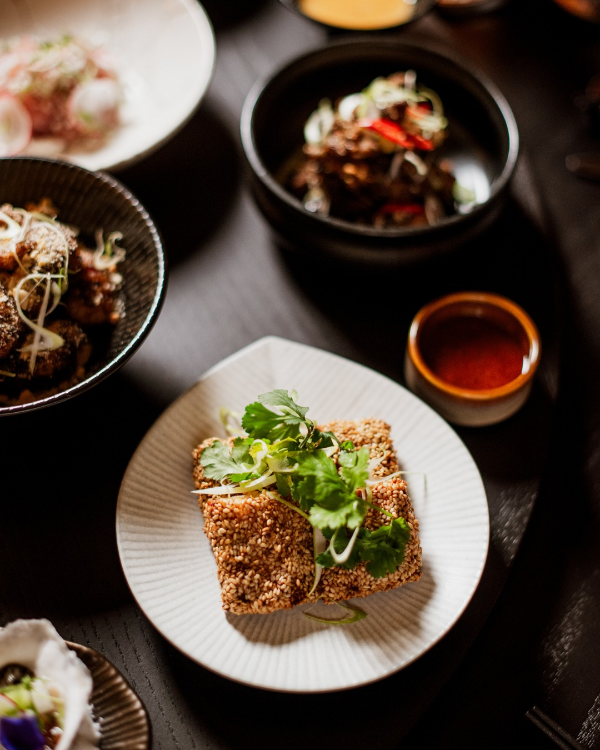
The Red Room by Chefs Warehouse
Looking ahead
The modern South African tasting menu is guided by rhythm, curiosity and intention. Chefs are trading rigidity for play, formality for intimacy and spectacle for authenticity. Fermier celebrates ingredient-led simplicity, DUSK spins imaginative narratives, Salon blends global inspiration with seasonal rhythm, and The Red Room embraces playful creativity from start to finish. One thing is certain: fewer frills, more feeling.
These menus invite diners to pause, notice and taste the season and the place. Seamless, not showy. Local, not limited. And above all, profoundly human.


Related posts
-

-
Creating connection: Sommelier Tinashe Nyamudoka on finding beauty in wine
-
It's never just a drink with...
-
-
-
Enter now: The S.Pellegrino Young Chef Academy is open for applications
-
It's more than a culinary...
-
-

-
Announced: The Eat Out Special Awards
-
Stay updated on the Eat Out Woolworths Restaurant...
-
Promoted Restaurants
-

Rust en Vrede Restaurant
Chef Fabio Daniel’s ingenuity lies in his ability to put his Italian-Brazilian heart on a plate using fresh South African ingredients and classic French...
-

Kleine Zalze Restaurant
Kleine Zalze Estate is a reputable producer of a wide range of quality wines. The Kleine Zalze Restaurant offers guests the opportunity to enjoy a relaxed,...
-

The Manor at Nederburg
No visit to the Cape Winelands is complete without a stop-over at Nederburg’s family-friendly The Manor restaurant and wine tasting hub in Paarl. Located in the...
-
Zest Restaurant
At Zest Restaurant the chefs work behind the open plan kitchen, with its wood fire grill, and can be seen whilst creating delectable dishes. Diners are able to...
-

The 11th Floor
ROOFTOP RESTAURANT & COCKTAIL BAR IN BEDFORDVIEW Step into a realm of culinary excellence at our international award-winning restaurant, and be transported to the...
-

Taste of Thai
The Most Authentic Thai Restaurant in South Africa Our Multi Award winning establishment offers a little genuine glimpse of Thailand in Hilton. through a journey of...