


News
Restaurant awards and the possible impact of Michelin’s arrival in South Africa
Tuesday, May 5th, 2026

Magazine teaser
First published in 1900 in France by brothers André and Édouard Michelin of the Michelin tyre company, it was less a restaurant guide than a free handbook for motorists, designed to get people driving further, wearing out tyres more (and faster), and stopping to eat along the way. From the outset, Michelin was commercial – probably one of the most successful pieces of brand content marketing ever created – and it remains so today. While early destination support likely emerged quietly in Europe during the 1990s, today’s system of openly underwriting the guide’s presence as a tool of tourism and global positioning became formalised soon after. The guide’s arrival in New York in 2005 marked a turning point – its first launch outside Europe. Subsequent editions in Tokyo, Hong Kong, Singapore and beyond entrenched this approach, with tourism boards and governments underwriting Michelin’s entry as a form of destination branding. In this new era, the guide’s judgments continued to be editorially independent – but its presence became a commodity in itself.
For South Africa, long positioned outside Michelin’s orbit, this shift matters. As elsewhere, Michelin’s presence would likely be tied to destination marketing support, underscoring its role not just as a guide, but as a tourism tool. More than just reviewing restaurants, Michelin confers legitimacy in a global system of comparison, changing the terms by which South African restaurants are measured and the level at which they are able to compete.

The Michelin Guide’s infuence on dining has been immense, and often deeply conflicted. At its best, stars can transform a restaurant’s fortunes overnight, drawing international attention, culinary tourism and financial stability to kitchens that might otherwise remain local secrets. Michelin has elevated chefs into cultural figures, sharpened standards of craft and consistency, and helped position entire towns and cities on the global dining map. Yet Michelin’s power also carries a quieter, more corrosive weight. The pressure to maintain stars has pushed some restaurants into unsustainable cost structures, rigid service models and a relentless pursuit of perfection that prioritises inspectors over diners. For some, a star brings prestige but not profit; for others, its loss can be devastating. This tension is laid bare by chefs who have voluntarily returned their stars. These decisions reveal a central paradox: Michelin can create icons and economies, but it can also distort kitchens, creativity and wellbeing. In this way, the guide functions not merely as a rating system, but as a powerful economic and psychological force – one as capable of reshaping restaurants as it is of breaking them. A single star can fill a restaurant’s reservation book in hours; three can turn an establishment into an international pilgrimage site. Losing a star can empty dining rooms just as quickly. Visibility does not guarantee sustainability – and prestige does not translate into profit.
Michelin insists its stars are awarded on food alone. Inspectors assess restaurants against five criteria: quality of ingredients, mastery of cooking techniques, harmony of flavours, the personality of the chef as expressed through the cuisine, and consistency across the menu and over time. Decor, service, style and price are officially excluded from star decisions. And while these criteria appear neutral on paper, their application is not.
Progression beyond one star implicitly requires a supporting ecosystem – service, beverage, staffing and hospitality infrastructure capable of sustaining the level of experience that Michelin’s two- and three-star definitions demand. The need for repetition, endurance and flawlessness inevitably favours restaurants with the financial and operational buffers to sustain performance night after night. In practice, a system designed to judge cooking alone inevitably rewards structure and operational resilience as much as culinary skill.
For all the talk of South Africa’s world-class cooking, much of this international perception is shaped by value. Our top tasting menus are priced at a fraction of their international counterparts – an advantage that has fuelled accessibility, acclaim and goodwill. Michelin, however, does not account for local economic context.
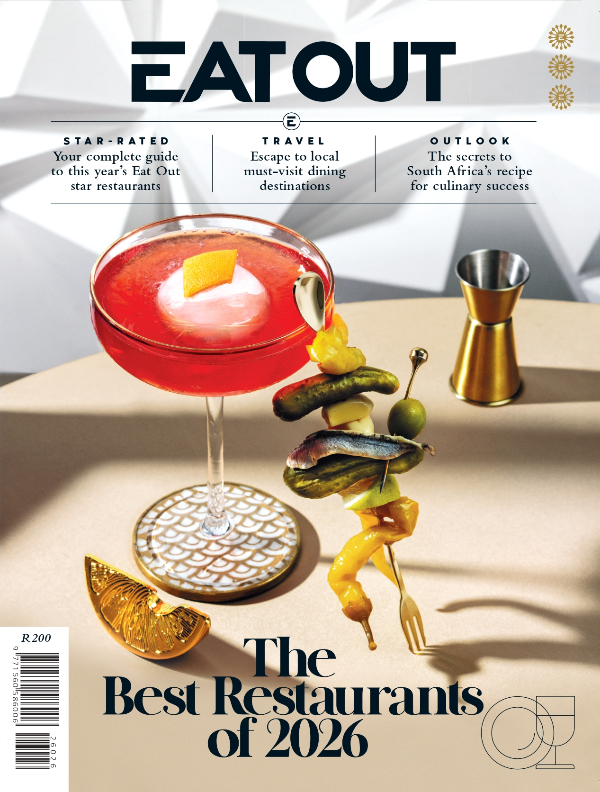
To read the full article, grab your copy of the 2026 Eat Out Magazine at Woolies or online!


Related posts
-

-
Aljoe Mario Beziek crowned Best Young Sommelier for 2026
-
This year's competition was one of the closest to...
-
-

-
Eat Out star chef Jess van Dyk joins the judging panel of Kokkedoor: Klassiek
-
The beloved cooking competition returns to...
-
-
-
WATCH: Catherine Adonis on what makes a successful pastry chef
-
And what inspires her...
-
Promoted Restaurants
-

The President Hotel – Restaurant Group
The President Hotel has a host of dining options available under one roof. Whether you’re in the mood for a romantic dinner, casual coffee, quick lunch or hearty...
-

Blowfish Restaurant
Though the menu is vast, the main reason to be here is for fish which is SASSI certified. Displayed in the fridges, choose the kind you want, have it weighed...
-
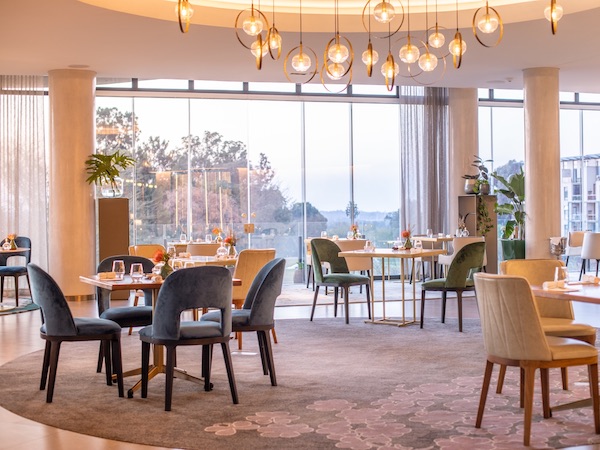
Séjour
At Sejour, modern fine dining is infused with travel and exploration in dishes such as the West Coast oysters with forbidden rice dressing, Wagyu steak and...
-

96 Winery Road Restaurant
This venerable place has been part of the fabric of Stellenbosch for so long that they must be doing something right. The many people who love coming here just...
-

Evita se Perron
Our café is open 6 days a week for breakfast & lunch and you can sit down inside or outside and order from our café menu. No table bookings, walk-ins only. We are...
-

Belly of the Beast
Belly of the Beast, situated in the heart of Cape Town, promises a unique dining experience. Inspired by South African cuisine, each course is more...